2026 NECO GCE ECONOMICS ANSWER
NOTE; Kindly trace these answers in your objective questions. Anywhere you see our answers among the options, please pick or select it, because they reshuffled the options and the numbering. Just stick to our answers and use them to trace wisely and accurately.)
ECONOMIC-Obj
TRACE THE OPTIONS/ANSWERS WITH OUR SOLUTIONS TO ENABLE YOU TO TRACE THEM FAST; THEY WERE RESHUFFLED AND REARRANGED;
ECONOMIC-OBJ!
1. 2015
2. want
3. progressive
4. Ogun
5. internal
6. Taiwan
7. Low deposit rate
8. strategic
9. outward
10. Investment in education
11. maximise outputs
12. wages
13. structural
14. commercial
15. elastic
16. purchasing improved machinery
17. ₦100.00
18. Adequate storage facilities
19. surplus
20. Ethnicity
21. production possibility
22. capital
23. ₦100,000
24. effective
25. increase the foreign exchange earnings from non-oil exports
26. consumers' wants and preference
27. 9
28. wholesalers
29. MC = MR
30. stagflation
31. import substitution
32. nationalisation
33. simple bar chart
34. High rate of importation
35. 111.1
36. negligence of agriculture
37. ₦60,000
38. shares
39. central
40. service
41. communal clashes
42. Environmental pollution
43. upstream and downstream
44. adding the marginal utility of all the units consumed
45. construction
46. interest rates
47. long-term borrowed fund
48. Issuing bank deposits
49. current
50. freedom of choice is allowed
51. Adam Smith
52. commercial
53. forces of demand and supply
54. regional security
55. marginal utility decreases
56. increase in price
57. promotions of citizens' living standard
58. capital
59. portability
60. 75%
=============================
(1)
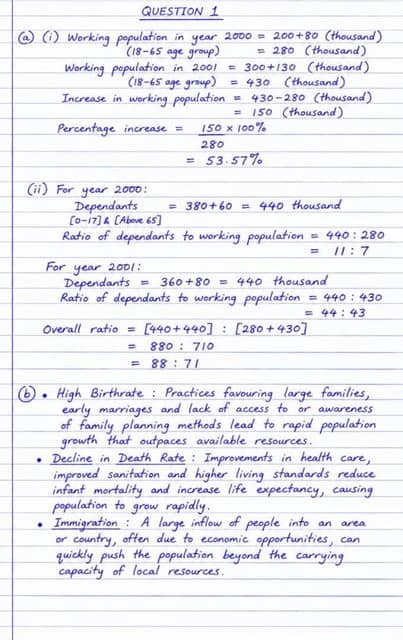
============================
(2)

============================
(3a)
Public enterprises are business organisations established, owned, financed and controlled by the government to provide essential goods and services to the general public. They are created mainly to promote public welfare rather than to make profit.
(3b)
=Advantages=
(PICK ANY THREE)
(i) Easy Formation: A cooperative society is easy to establish because it requires fewer legal formalities compared to other business organisations.
(ii) Limited Liability: Members are only responsible for the amount they contribute and do not lose their personal property when the society incurs debts.
(iii) Democratic Control: Every member has equal voting rights, irrespective of the amount contributed.
(iv) Encourages Savings: It encourages members to save money regularly and provides opportunities for obtaining loans.
(v) Sharing of Profits: Profits made by the society are shared among members according to their participation or contribution.
(vi) Mutual Assistance: Members help one another financially and economically, thereby promoting unity and cooperation.
=Disadvantages=
(PICK ANY TWO)
(i) Limited Capital: A cooperative society may not have enough capital because it depends mainly on contributions from its members.
(ii) Poor Management: The society may suffer from poor management because some elected officials may lack the necessary business experience.
(iii) Slow Decision-Making: Decisions may take a long time because members must be consulted before important decisions are made.
(iv) Lack of Motivation: Some members may not be committed to the success of the society because profits are shared among members.
(v) Limited Expansion: The society may find it difficult to expand its business due to inadequate funds and limited resources.
(vi) Conflicts Among Members: Disagreements may arise among members over the sharing of profits, management and decision-making, affecting the progress of the society.
=============================
(4a)
Division of labour is the process of breaking down production activities into smaller tasks and assigning each task to different workers according to their skills and specialisation. It enables workers to concentrate on specific jobs, thereby increasing efficiency and productivity.
(4b)
(PICK ANY FIVE)
(i) Demand for Goods and Services: When the demand for goods and services increases, employers employ more workers to increase production. A fall in demand may lead to a reduction in workers.
(ii) Level of Wages: When wages are high, employers may reduce the number of workers they employ to minimise production costs. Lower wages may encourage employers to employ more workers.
(iii) Technological Development: The introduction of machines and modern technology may reduce the demand for human labour because machines can perform some jobs faster.
(iv) Availability of Capital: When businesses have enough capital to expand their operations, they are likely to employ more workers. Lack of capital may reduce employment.
(v) Size of the Market: A large market increases the demand for goods and services, encouraging producers to employ more workers to meet customers' needs.
(vi) Government Policy: Government policies such as minimum wage laws, taxation and employment regulations can influence the number of workers employers are willing to employ.
(vii) Productivity of Labour: When workers are more productive and efficient, employers may be encouraged to employ them because they contribute more to production and profit.
============================
(5a)
Public finance is the branch of economics that deals with how the government raises revenue, spends money and manages public funds to provide essential services and promote economic development.
(5b)
(i) Transaction Motive: This is the desire to hold money for daily purchases of goods and services. People keep money to meet their regular expenses and daily needs. Example: A person keeps money to buy food, pay transport fares and purchase household items.
(ii) Precautionary Motive: This is the desire to hold money to meet unexpected expenses or emergencies that may arise in the future. People save money to protect themselves against unforeseen circumstances. Example: A person keeps money in the bank to pay hospital bills, repair a damaged car or handle sudden unemployment.
(iii) Speculative Motive: This is the desire to hold money in order to take advantage of future investment opportunities or changes in the prices of financial assets. People keep money while waiting for a better opportunity to invest. Example: An investor keeps money instead of buying shares immediately because he expects share prices to fall, allowing him to buy them later at a cheaper price.
============================
(6a)
Marginal Propensity to Consume (MPC) is the proportion of an increase in income that is spent on the consumption of goods and services rather than being saved.
(6b)
(PICK ANY FOUR)
(i) Gross Domestic Product (GDP): This is the total monetary value of all final goods and services produced within a country's geographical boundaries in a given period, usually one year.
(ii) Gross National Product (GNP): This is the total monetary value of all final goods and services produced by the citizens of a country, including income earned abroad, within a given period.
(iii) Net National Product (NNP): This is the total value of goods and services produced by a country's citizens after deducting depreciation from Gross National Product.
(iv) National Income (NI): This is the total income earned by all factors of production in a country within a given period, usually one year. It includes wages, rent, interest and profit.
(v) Personal Income (PI): This is the total income received by individuals and households from all sources before personal income tax is deducted.
(vi) Disposable Income (DI): This is the amount of money individuals have left to spend or save after paying personal income taxes. It is calculated by subtracting personal taxes from personal income.
============================
(7a)
Money is anything that is generally accepted as a means of payment for goods and services and settlement of debts. It serves as a medium of exchange and a measure of value in an economy.
(7b)
(PICK ANY FOUR)
(i) Medium of Exchange: Money serves as a means of buying and selling goods and services. It is generally accepted by everyone in exchange for goods and services. It removes the difficulties of the barter system, where people had to exchange goods directly before obtaining what they wanted.
(ii) Measure of Value: Money is used to measure and express the value of different goods and services. It provides a common unit for comparing the prices of various commodities, making it easier for buyers and sellers to determine their worth.
(iii) Store of Value: Money allows individuals to save their wealth for future use. People can keep money in banks or at home and use it whenever the need arises. It makes saving easier and helps people prepare for future expenses.
(iv) Standard of Deferred Payment: Money is used as a standard for making payments in the future. It makes borrowing and lending possible because debts can be stated and repaid in monetary terms. For example, a person who borrows ₦100,000 can repay the same amount at an agreed future date.
(v) Unit of Account: Money provides a standard unit for recording and calculating the value of goods, services and business transactions. It helps individuals, companies and governments to prepare budgets, keep financial records and calculate profits and losses.
(vi) Transfer of Value: Money makes it possible to transfer wealth from one person or place to another without carrying physical goods. It allows people to send and receive money through banks and electronic payment platforms. For example, a person in Enugu can transfer money to someone in Lagos through a bank application.
=============================
(8)
(PICK ANY FIVE)
(i) Increase in Interest Rate: The government, through the Central Bank, can increase interest rates to discourage borrowing and spending. This reduces the amount of money in circulation and helps to control inflation.
(ii) Reduction in Money Supply: The Central Bank can reduce the amount of money circulating in the economy through monetary policies. This helps to reduce excessive demand for goods and services, thereby controlling rising prices.
(iii) Increase in Taxation: The government can increase taxes on individuals and businesses to reduce their disposable income. This reduces purchasing power and helps to control excessive demand for goods and services.
(iv) Reduction in Government Expenditure: The government can reduce unnecessary spending on projects and other activities. This helps to reduce the amount of money entering the economy and controls inflationary pressure.
(v) Price Control: The government can fix maximum prices for essential goods and services to prevent traders and producers from charging excessively high prices.
(vi) Increase in Production: The government can encourage farmers and industries to produce more goods and services. Increased production helps to meet consumers' demand and reduces scarcity, which can cause inflation.
(vii) Importation of Goods: The government can encourage the importation of essential goods from other countries when local production is insufficient. This increases the supply of goods and helps to reduce their prices.
(viii) Reduction in Import Duties: The government can reduce taxes and duties on imported essential goods and raw materials. This reduces production and importation costs, making goods more affordable.
(ix) Control of Bank Lending: The Central Bank can introduce strict lending policies to commercial banks to reduce excessive borrowing by individuals and businesses. This helps to reduce spending and control inflation.
(x) Promotion of Savings: The government can encourage people to save more by providing attractive interest rates on savings. This reduces excessive spending and helps to reduce the pressure on prices.
============================
(9a)
Human capital development is the process of improving people's knowledge, skills, abilities, health and experience through education, training and other developmental programmes to make them more productive and efficient in their work.
(9b)
(PICK ANY FIVE)
(i) Education: Education provides individuals with the knowledge and intellectual abilities needed to perform different jobs effectively. It improves people's understanding and prepares them for future employment.
(ii) Training: Training involves teaching workers specific skills and techniques needed to perform their duties efficiently. It helps workers to improve their performance and become more productive.
(iii) Healthcare: Good healthcare helps individuals maintain good physical and mental health. Healthy workers are more active, energetic and capable of performing their duties effectively.
(iv) Skill Acquisition: This involves learning practical and technical skills that enable individuals to become self-employed or secure employment. Examples include tailoring, welding, catering and computer skills.
(v) Experience: Work experience helps individuals gain practical knowledge through continuous participation in their jobs. It improves their ability to handle tasks and solve problems.
(vi) Research and Development: Research helps individuals and organisations discover new ideas, methods and technologies that improve productivity and encourage innovation.
(vii) Nutrition: Proper nutrition provides the body with essential nutrients needed for healthy growth and development. Well-nourished individuals are more energetic and productive at work.
(viii) Motivation: Motivation involves encouraging workers through good salaries, promotion, rewards and other incentives. It increases workers' commitment, job satisfaction and productivity.
============================
(10)
(PICK ANY FIVE)
(i) Devaluation of Currency: The government can reduce the value of its currency compared to foreign currencies. This makes locally produced goods cheaper for foreigners and imported goods more expensive, thereby encouraging exports and reducing imports.
(ii) Increase in Exportation: The government can encourage local industries and farmers to produce more goods for export. This increases foreign exchange earnings and helps to correct a balance of payments deficit.
(iii) Reduction in Importation: The government can reduce the importation of unnecessary goods and encourage people to patronise locally produced goods. This reduces the amount of foreign exchange spent on imports.
(iv) Import Restrictions: The government can introduce quotas, tariffs and other restrictions on imported goods. This helps to discourage excessive importation and protect local industries.
(v) Encouragement of Foreign Investment: The government can create a favourable business environment to attract foreign investors. This brings foreign capital into the country and improves the balance of payments position.
(vi) Promotion of Tourism: The government can develop tourist centres and improve facilities to attract foreign visitors. Foreign tourists spend money in the country, thereby increasing foreign exchange earnings.
(vii) Reduction in Government Expenditure: The government can reduce unnecessary spending, especially on imported goods and services. This helps to reduce demand for foreign currencies and improve the balance of payments.
(viii) Borrowing from Foreign Countries: A country experiencing a balance of payments deficit can obtain loans from foreign governments and international financial institutions. Such loans provide foreign exchange to meet international payment obligations.
(ix) Improvement in Local Production: The government can support local industries through loans, subsidies and modern technology. Increased local production reduces dependence on imported goods and saves foreign exchange.
(x) Exchange Control: The government can control the buying and selling of foreign currencies and regulate the amount of foreign exchange available for imports. This helps to prevent unnecessary foreign exchange spending and reduce balance of payments deficits.
============================
(11)
(PICK ANY FIVE)
(i) Inadequate Capital: Developing countries often lack sufficient financial resources to establish industries, improve infrastructure and expand businesses. This limits investment and slows down economic growth.
(ii) Unemployment: High unemployment reduces the number of people actively involved in production. It also increases poverty and reduces the purchasing power of citizens.
(iii) Poor Infrastructure: Inadequate roads, electricity, water supply and communication facilities make production expensive and discourage local and foreign investors.
(iv) Political Instability: Frequent changes in government, corruption, insecurity and political conflicts discourage investors and disrupt economic activities.
(v) Low Level of Education: Lack of quality education and skilled manpower reduces workers' efficiency and productivity, making it difficult for the country to achieve economic development.
(vi) Overdependence on Agriculture: Many developing countries depend heavily on agriculture and the export of raw materials. This makes their economies vulnerable to poor harvests and changes in world market prices.
(vii) Rapid Population Growth: Excessive population growth increases pressure on available resources such as food, housing, education and healthcare, making economic development difficult.
(viii) Poor Technological Development: Lack of modern technology and machinery reduces production efficiency and makes local industries less competitive in the international market.
(ix) Corruption: Corruption leads to the misuse and diversion of public funds meant for development projects. It discourages investment and increases poverty.
(x) High External Debt: Developing countries often borrow large amounts of money from foreign countries and institutions. Repayment of these debts and interest reduces the funds available for education, healthcare and infrastructure development.
============================
(12)
(PICK ANY FIVE)
(i) Employment Generation: Industrialisation creates employment opportunities for both skilled and unskilled workers in factories and other industrial establishments. This helps to reduce unemployment, poverty and social problems. It also enables individuals to earn income, support their families and improve their standard of living.
(ii) Increase in National Income: Industrialisation increases the production of goods and services in an economy. As more goods are produced and sold, the total value of national output increases, leading to an increase in national income and economic growth.
(iii) Development of Infrastructure: Industrialisation encourages the development of important infrastructure such as roads, bridges, electricity, water supply, airports and communication facilities. These facilities make transportation and production easier and promote other economic activities.
(iv) Increase in Export Earnings: Industries produce goods that can be sold to other countries. Exportation of manufactured goods brings foreign exchange into the country, improves the balance of payments and strengthens the economy.
(v) Reduction in Importation: Industrialisation encourages the local production of goods that were previously imported from other countries. This reduces dependence on foreign products, saves foreign exchange and helps to protect local industries from foreign competition.
(vi) Technological Advancement: Industrialisation promotes the introduction and use of modern machines, equipment and production techniques. It encourages research and innovation, improves production methods and increases the efficiency and quality of goods produced.
(vii) Improvement in Standard of Living: Industrialisation provides employment, increases people's income and makes different goods and services available to consumers. Workers can afford better food, housing, education, healthcare and other necessities of life.
(viii) Diversification of the Economy: Industrialisation helps a country to develop different sectors such as manufacturing, construction, mining and processing. This reduces overdependence on agriculture or crude oil and makes the economy more stable against fluctuations in world market prices.
(ix) Development of Skills: Industrialisation encourages technical education, vocational training and apprenticeship programmes. Workers acquire specialised skills and practical experience in operating machines, managing industries and handling technical activities, thereby improving their productivity.
(x) Increase in Government Revenue: Industrial establishments pay company taxes, import duties, licence fees and other levies to the government. The revenue generated can be used to provide schools, hospitals, roads, electricity and other social amenities that promote economic development.
 |
 |